Leeds United isn’t just a football club—it’s a legacy carved in passion, triumph, and resilience. From glory days at Elland Road to battling back through the divisions, this club has a story worth telling.
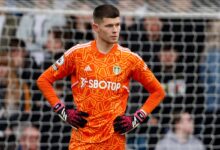
Leeds United: A Legacy Forged in Football History

Founded in 1919, Leeds United has grown from humble beginnings into one of England’s most iconic football institutions. Their journey reflects the highs of European contention and the lows of relegation battles, all while maintaining a fiercely loyal fanbase.
The Founding and Early Years
Leeds United was established after the dissolution of Leeds City, a club expelled due to financial misconduct during World War I. The Football League granted the city a new franchise, and on October 17, 1919, Leeds United was officially born. The club quickly found its footing, joining the Football League Second Division in 1920.
- The inaugural season saw Leeds finish mid-table, laying the foundation for future growth.
- By 1924, under manager Arthur Fairclough, the club earned promotion to the First Division for the first time.
- Despite early promise, Leeds struggled to maintain top-flight status, suffering relegation in 1926 and again in 1930.
These early decades were marked by inconsistency, but they helped shape the club’s identity—resilient, determined, and always striving for better.
Golden Era Under Don Revie
The true transformation of Leeds United began in 1961 when Don Revie took over as manager. What followed was arguably the most successful period in the club’s history. Revie instilled discipline, tactical innovation, and a winning mentality that turned Leeds into a dominant force.
- Under Revie, Leeds won two First Division titles (1968–69, 1973–74), four FA Cups, and a UEFA Cup.
- The 1968–69 title win was historic—Leeds clinched the championship on the final day after a 2–1 victory over Burnley.
- Revie also developed a youth system that produced legends like Billy Bremner, Norman Hunter, and Eddie Gray.
“We weren’t dirty; we were determined.” — Billy Bremner, on the team’s controversial but effective playing style.
The Revie era wasn’t without controversy. Critics labeled Leeds as overly aggressive, but their success was undeniable. They reached the European Cup final in 1975, only to lose 2–0 to Bayern Munich amid contentious refereeing decisions—a moment still debated by fans today.
Iconic Players Who Defined Leeds United
No discussion of Leeds United is complete without honoring the legends who wore the white shirt with pride. These players didn’t just perform—they inspired generations.
Billy Bremner: The Heart and Soul
Bremner, standing at just 5’4”, was a giant on the pitch. As captain during the Revie years, he embodied the club’s fighting spirit. A midfield dynamo, Bremner made over 770 appearances and scored 119 goals—a remarkable tally for a player known more for his leadership than finishing.
- He won two league titles, two Inter-Cities Fairs Cups, and an FA Cup with Leeds.
- Bremner earned 54 caps for Scotland and was known for his tireless work rate and fierce competitiveness.
- After retiring, he returned as manager in the 1980s, though with limited success.
Bremner remains a symbol of Leeds’ golden age, and his statue outside Elland Road stands as a testament to his enduring legacy.
Lucas Radebe: The Chief
South African defender Lucas Radebe joined Leeds in 1994 as part of a deal that initially focused on Phil Masinga. But it was Radebe who became a fan favorite. Known as “The Chief,” he captained the club during a turbulent yet exciting period at the turn of the millennium.
- Radebe made 262 appearances and became a symbol of leadership and resilience.
- He played a crucial role in Leeds’ Champions League semi-final run in 2001.
- Nelson Mandela once said, “This is my hero,” referring to Radebe—a testament to his impact beyond football.
Radebe’s influence extended off the pitch too. He became an ambassador for Leeds and continues to be involved with the club’s community initiatives.
Eric Cantona: The Fledgling Star
Before becoming a Manchester United legend, Eric Cantona was a Leeds United star. Signed from Nîmes in 1992, Cantona brought flair, creativity, and unpredictability to the team. In just one season, he became a fan favorite.
- He scored 13 goals in 39 appearances, helping Leeds win the final First Division title in 1992.
- Cantona’s iconic backheel goal against Sunderland remains one of the most replayed moments in club history.
- His transfer to Manchester United later that year sparked one of football’s most bitter rivalries.
Though his time at Leeds was brief, Cantona’s impact was profound—proving that even short stints can leave lasting legacies.
Elland Road: The Sacred Ground of Leeds United
Elland Road isn’t just a stadium—it’s a fortress, a home, and a cathedral of football passion. Located in the Beeston area of Leeds, it has been the club’s home since 1919.
Architecture and Capacity
Elland Road has undergone numerous renovations over the decades. Today, it boasts a capacity of over 37,000, making it one of the largest club stadiums in England.
- The West Stand is the largest single-tier stand in the UK, holding over 15,000 fans.
- The East Stand houses the Leeds United Museum, showcasing the club’s rich history.
- The South Stand, known as the “Kop,” is the traditional home of the most vocal supporters.
The stadium’s design emphasizes intimacy and atmosphere, ensuring that even in modern times, the roar of the crowd remains deafening.
Atmosphere and Fan Culture
Leeds fans are renowned for their passion. The chant of “We Are Leeds!” echoes through Elland Road on matchdays, creating an electric environment.
- The fan group “Leeds United Supporters’ Trust” plays an active role in club governance and community outreach.
- Pre-match rituals include the singing of “Marching On Together,” the club’s unofficial anthem.
- Visiting teams often cite the intimidating atmosphere as a key challenge when playing at Elland Road.
“There’s no place like Elland Road when the crowd gets going. It’s pure energy.” — Former player Alan Smith.
The connection between the club and its supporters has been tested over the years—especially during financial turmoil and relegations—but it has never broken.
Leeds United’s Rollercoaster: Relegations and Revivals
Leeds United’s history is a tale of dramatic highs and devastating lows. The club’s financial mismanagement in the early 2000s led to a catastrophic fall from grace.
The Financial Collapse of the 2000s
After reaching the Champions League semi-finals in 2001, Leeds spent heavily to compete with Europe’s elite. However, revenue couldn’t keep pace with wage bills and transfer fees.
- By 2002, the club was forced to sell key players like Rio Ferdinand, Alan Smith, and Robbie Keane.
- Relegation from the Premier League followed in 2004, marking the start of a downward spiral.
- In 2007, Leeds entered administration and were relegated to League One—the third tier of English football—for the first time in their history.
This period was traumatic for fans, but it also sparked a grassroots movement to save the club.
The Massimo Cellino Era
In 2014, Italian entrepreneur Massimo Cellino purchased the club. His tenure was chaotic—marked by managerial changes, player turnover, and controversy.
- Cellino appointed eight different managers in four years, including Neil Warnock, Steve Evans, and Garry Monk.
- Despite instability, Leeds remained competitive in the Championship, often finishing in the playoff places.
- His ownership was criticized for lack of transparency and short-term thinking.
Cellino sold the club to Anderlecht owner Andrea Radrizzani in 2017, paving the way for a more stable future.
Marcelo Bielsa and the Leeds United Renaissance
The appointment of Marcelo Bielsa in 2018 marked a turning point in Leeds United’s modern history. The Argentine manager brought a revolutionary style of play and an unmatched work ethic.
Bielsa’s Tactical Revolution
Bielsa implemented his signature high-pressing, attacking 4-1-4-1 system, transforming Leeds into one of the most exciting teams in the Championship.
- Leeds led the league in pressing intensity, with players covering more distance per game than any other team.
- The 2019–20 season saw Leeds concede only 37 goals—the second-best defensive record in the league.
- Bielsa’s training methods were legendary, including detailed dossiers on opponents and intense fitness regimes.
Fans dubbed him “El Loco” for his eccentric but effective approach, and his influence extended beyond tactics—he restored pride and identity to the club.
Promotion Back to the Premier League
After 16 years in the second tier, Leeds United secured promotion to the Premier League in 2020. They finished second in the Championship, behind champions West Brom, but ahead of Brentford in the playoff race.
- The decisive moment came on July 17, 2020, when a 4–0 win over Charlton Athletic confirmed promotion.
- Kalvin Phillips, known as the “Yorkshire Pirlo,” became a symbol of the Bielsa era with his box-to-box dominance.
- The promotion was celebrated across Leeds, with fans gathering (despite pandemic restrictions) to honor the team.
“This is for the fans. They never stopped believing.” — Marcelo Bielsa, post-promotion speech.
The return to the top flight was emotional and long overdue, marking the culmination of years of struggle and perseverance.
Leeds United in the Premier League: Challenges and Identity
Returning to the Premier League was a dream come true, but survival required adaptation. The financial gap between the top flight and the Championship is vast, and Leeds faced stiff competition.
Survival and Mid-Table Stability
In their first season back (2020–21), Leeds finished 9th—a remarkable achievement under Bielsa. They played attractive football and earned respect across the league.
- Key players like Raphinha, Patrick Bamford, and Stuart Dallas stepped up.
- Leeds scored 62 goals—the fifth-highest in the league—showcasing their attacking intent.
- However, defensive vulnerabilities remained, with 54 goals conceded.
The following seasons were tougher. Bielsa left in 2022 after a run of poor results, and Leeds cycled through managers including Jesse Marsch and Javi Gracia.
Relegation and Immediate Response
In 2023, Leeds were relegated back to the Championship after a dramatic final day. A loss to Tottenham, combined with Leicester’s win, sealed their fate.
- The relegation was heartbreaking, but the club acted swiftly to rebuild.
- Thomas Christiansen was appointed as head coach with a mandate to return to the Premier League.
- The club retained key players and invested in youth development.
Despite the setback, the foundation laid during the Bielsa years continues to influence the club’s philosophy.
Leeds United’s Rivalries: More Than Just Football
Rivalries define football culture, and Leeds United has several intense ones—born from geography, history, and competition.
Yorkshire Derby: Leeds vs. Sheffield United
The clash between Leeds and Sheffield United is one of England’s fiercest regional rivalries. Known as the “Yorkshire derby,” it’s fueled by industrial-era competition between the two cities.
- Matches are often physical and emotionally charged.
- The rivalry intensified in the 1960s when both clubs were title contenders.
- Recent meetings in the Championship have reignited the fire.
Fans from both sides view this as more than a game—it’s about regional pride.
Manchester United: The Cantona Effect
The rivalry with Manchester United is less about geography and more about betrayal. Eric Cantona’s 1992 transfer remains a sore point.
- Leeds fans feel Cantona was sold too cheaply and too soon.
- His subsequent success at Old Trafford—winning four Premier League titles—added salt to the wound.
- Matches between the two are rare now, but when they happen, emotions run high.
While not a traditional derby, the psychological edge matters deeply to Leeds supporters.
Other Notable Rivalries
Leeds also have competitive ties with clubs like Chelsea (due to frequent clashes in the 70s) and Millwall (stemming from a 1970s FA Cup final and subsequent hooliganism).
- The 1970 FA Cup final against Chelsea is infamous for its violence and replay drama.
- Matches with Millwall are often marked by heightened security due to past incidents.
- There’s also a growing rivalry with local side Huddersfield Town, though it’s less intense than others.
These rivalries, whether historic or modern, contribute to the club’s identity and fan engagement.
Leeds United’s Youth Academy: Breeding Future Stars
Leeds United has a proud tradition of developing young talent. The club’s academy has produced several first-team players and future stars.
Historic Academy Successes
From the Revie era to the modern day, Leeds has invested in youth development.
- Billy Bremner, Eddie Gray, and Norman Hunter all came through the ranks.
- In the 1990s, players like Harry Kewell and Lee Bowyer emerged as key figures.
- The 2000s saw the rise of Jonathan Woodgate and Alan Smith.
While the club sold many of these talents early, their success proved the quality of the academy.
Modern Academy Structure
Today, Leeds United’s academy operates under the Elite Player Performance Plan (EPPP) and is categorized as a Category Two setup.
- The Thorp Arch training facility houses state-of-the-art coaching and medical resources.
- Recent graduates include Kalvin Phillips, who became a Premier League regular and England international.
- The club focuses on technical development, tactical intelligence, and mental resilience.
Leeds continues to scout talent across Yorkshire and beyond, aiming to produce homegrown players who can represent the first team.
What is the most successful period in Leeds United’s history?
The most successful period was under manager Don Revie from 1961 to 1974. During this time, Leeds won two First Division titles, four FA Cups, one League Cup, and a UEFA Cup. They also reached the European Cup final in 1975.
Why was Leeds United relegated in 2023?
Leeds were relegated in 2023 due to a combination of poor form, managerial instability, and defensive weaknesses. A critical loss to Tottenham on the final day, coupled with Leicester City’s win, confirmed their drop to the Championship.
Who is the greatest Leeds United player of all time?
While opinions vary, Billy Bremner is widely regarded as the greatest Leeds United player. His leadership, longevity, and success during the Revie era cemented his legendary status.
What is the capacity of Elland Road?
Elland Road has a current capacity of 37,792, making it one of the largest club stadiums in England. It has undergone several renovations since its opening in 1919.
Who owns Leeds United as of 2024?
As of 2024, Leeds United is owned by 49ers Enterprises, the investment arm of the NFL’s San Francisco 49ers. They acquired a majority stake in 2018 and have since focused on stabilizing the club financially.
Leeds United’s story is one of passion, pain, and perseverance. From the glory days under Don Revie to the emotional return under Marcelo Bielsa, the club has weathered storms that would break lesser institutions. Their home at Elland Road remains a fortress of belief, and their fans, the lifeblood of the club, have never wavered. While the future holds challenges, the legacy of Leeds United—built on grit, glory, and greatness—ensures that their journey is far from over.
Further Reading:
